

I didn’t realise at first. Everybody was dead. Everybody.
I was on the beach, the sun was out, the wind was gusty, and my 14-year-old daughter, Siri had gone for an Orange Twist at the gaudy trailer with the noisy generator, parked above the tideline.
“Go on, then. Get a lolly, I don’t mind.”
“Thanks Dad!”
My wife, Brie, was addicted to dominating the determined surf on her new bodyboard.
“I want to stay in for a few more waves!” she had beamed.
Everything was normal, everything was real. I understood the patterns of sounds and movements around me.
Everything made sense.
I only felt something off when no one seemed to be coming back to me – no skipping little feet, that enthused excited voice, or the dragging board on the sand. I was almost asleep on the picnic blanket but sat upright and scanned the beach, pulling my shades off for clarity. I sensed it in the air, like a delicate whisper from a dark force, all was about to change.
I noticed there was an unnatural amount of people sunbathing asleep, but more than that, some were lying on the sand face down, or in contorted poses, nowhere near a family or bag or blanket.
The scene was wrong.
I realised, as I surveyed the expanse of packed beach, that people were collapsing. They were stumbling out of the shallows of the wild sea, confused, roaming in circles incoherently, falling to their knees. There was a lack of panic or screams. People were quietly dying on the beach.
I stood up. The wind was harder on my skin. I pulled on my T-shirt and began running to the trailer selling ice lollies. The queue was still there, but nobody was standing, all lying on the sand like they had been dragged there and placed perfectly in line. My girl was mid-way in the queue, my bank card still clutched in her small hand stubbornly.
I made a squealing sound and turned back to the sea. The waves were churning bodies over and over in white crested rollers. Brie was there, I could tell it was her by her bright pink board, she was face down in the water. There was no blood, just bodies, hundreds of bodies.
In no time at all, I was the only one left standing on the beach.
I waited for ‘it’ to catch me, whatever ‘it’ was, but nothing happened.
After a crash of confusion and yelling at the sky, I dragged my family together in a pile at the top of the beach, with a flood of grief that I had never experienced before. They were ashen grey with froth on their lips.
The phones did not work, there were no emergency responders, and there was nothing to suggest anyone had survived whatever this was.
From a vantage point on the dunes, I caught sight of a far-off plane, a large one – a 747 I think, plummeting like a stone from the clouds into farmers’ fields, with smoke and fire and finality.
I listened to my breathing, in, out, in, out.
It didn’t make sense anymore.
I made it back to the campsite by foot, all the way back, stepping over the dead with heavy naked feet.
They were like human litter, discarded after a storm. They were in the hedgerows, some wrapped in deflated bags in crashed cars, or in the road splayed like they’d been thrown to the ground violently.
Crows and gulls circled above in their hundreds, whirlpools of birds rising like an airborne army.
I curled up in our shivering tent and I cried.
Strangely enough, the shock of grief made me sleep.
The next morning, I woke up to hard rain on the tent canvas. I was cold. Since our first night of the family holiday in North Devon, I had been persistently cold. I slept in my clothes every night and buried my head under a coat.
I could have slept anywhere but the tent felt like the only place I should. All their belongings were there, the cuddly toys, the shoes and sandals, the half-read books and personal torches for night escapes to the loo. I had to protect the temple of our family, if only for one night.
When the rain stopped, I decided to go to the campsite shop and eat whatever I could find.
On the way across the field, I stopped intermittently to take it all in. Bodies of campers were strewn about the grass, sat with arms drooping over fold-out chairs, or slumped in their tents or cars. Some were rigid in rigour mortis, and all who were exposed were soaked through.
The shop was well stocked with instant foods, flapjacks and pastries from the previous day. I ate what I could stomach and snatched a bottle of Jameson Irish whisky from the top shelf behind the counter, and the curled corpse of the campsite manager.
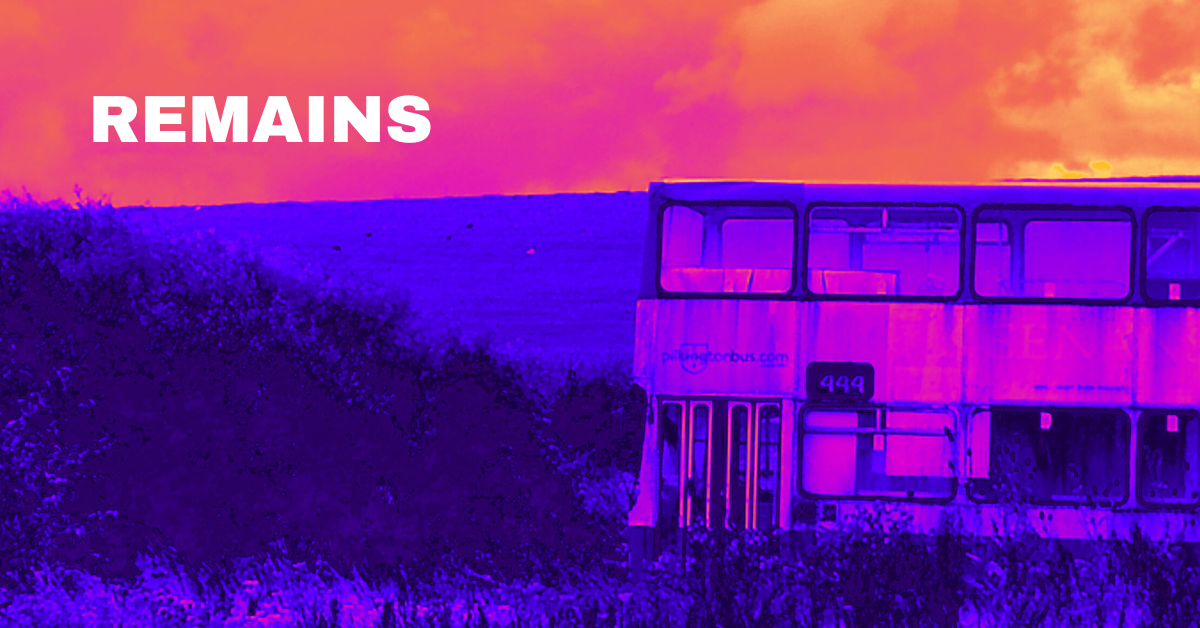
Outside, I noticed a double-decker bus had crashed gently into the hedges of the field opposite and I wondered if it would now remain forever a relic, an artefact to mark the passing of a species.
Days before the holiday, we had heard the news of a new strain of the virus.
“It’s nothing to worry about,” the prime minister had said, “It’s all under control, this time.”
I took out my car keys and swigged from the whisky. If I was alive, there may be others. Being left behind by the death of those you love is like being adrift on a harsh ocean with no warmth. You cling on through an old instinct, but you don’t want to, you want to be with them, like you always have, like you chose to.
The End

 Dystopian Days