
When you die, it isn’t usually like the movies, not that I’d had a means to see a movie for a long time. The flat screens were now used to cover gaps in roofs, or as makeshift tabletops.
I digress.
I mean, you don’t get a neat ending where it all makes sense. You don’t say goodbye to your loved ones with a convenient hug and a ‘so long’ smile. In most cases when that final day lands, one day, you just are no longer there; you collapse on the way to somewhere, you die without knowing who is with you, you don’t wake up. That’s why you love consistently, constantly, so there is never any doubt when it finally, inevitably happens. You have to have truth when it comes to love; you have to make sure the bond is natural, is real.
Lilly was ten, and I wasn’t sure she would see eleven. There just wasn’t enough to live on, enough food, enough water, enough of anything at all, in fact. Mel, my long-suffering rock of a partner, told me that if that ever happened, or when that happened, she was proud of me, but in some ways, it made it worse. We all felt love like a physical tether joining us; it was hard to explain.
The worse things became, that tether became stronger, tougher.
I had hope, or I wouldn’t be doing this, but still, this day would be like Neanderthals attacking a warship with sticks. But we had to try. We were all in a collective rut where we could wait till it killed us, or we could get up and do something. I always needed to do something; it was a fire in me that could not be quelled. It was the reason that Mel fell for me in the first place, and the reason she put up with me.
I left my family two days ago in the crumbling shell of that building, the heat beating down, with dwindling stockpiles of my supplies and told them it would all be OK; it was enough. It had to be.
Lilly had her favourite old ragdoll hanging from one hand like it was dead, there for her private sense of security and company. It was like her talisman, her safe place; she treasured it despite its threadbare state. In turn, Mel held Lilly tight, her eyes shining in that ‘halfway house’ just before the floodgates opened and the tears broke free. Her fair hair was tangled, her clothes worn and torn. She mouthed the words ‘I love you’ as I looked over my shoulder, and I felt sad, as if I were marooning them.
And now I was here, with the dirt blowing in my face and a sight coming over the hill that made me angry and afraid in equal measure.
The grey, barren hill was a patchwork of dead trees, rocks and swirling dust. The shabby, makeshift canvas tents scattered around the scene stank of faeces, sweat and desperation. People of all ages sat despondently in little circles, saying little to nothing, like they had run out of humanity. They looked docile, cowed – their eyes drained clean of energy. They coughed instead of talking; they cried or rocked back and forth, stuck somewhere in a dead-end cul-de-sac in their minds.
I heard a sizeable transport drone ship overhead coming from our route; it made me nervous, like maybe it had tracked us. I dared not look up. It buzzed above us on its way toward the huge black block embedded permanently like an ancient, exposed tomb in the sands.
As we walked through the thick, dishevelled tent village, the environment abruptly changed in nature as we trudged closer to the imposing black wall rising from the desolation. A final frontline of tents bordered on what must have been a thousand colourful, rainbow-bright buckets and bowls. They were laid out in wide concentric rings, just beneath the massive metal vent flaps of the windowless block that was the West Isle Data centre. Every kind of bucket, food bowl and dustbin was there, ready to receive.
The Venting
The data centre was black and featureless, a monolithic shining brick a hundred metres high, and when I drew closer, I could not determine the ends of it when I peered left and right. It was more like a landmass, an island, or a weird flat-top mountain, something so monstrously huge we were nothing of significance under its shadow.
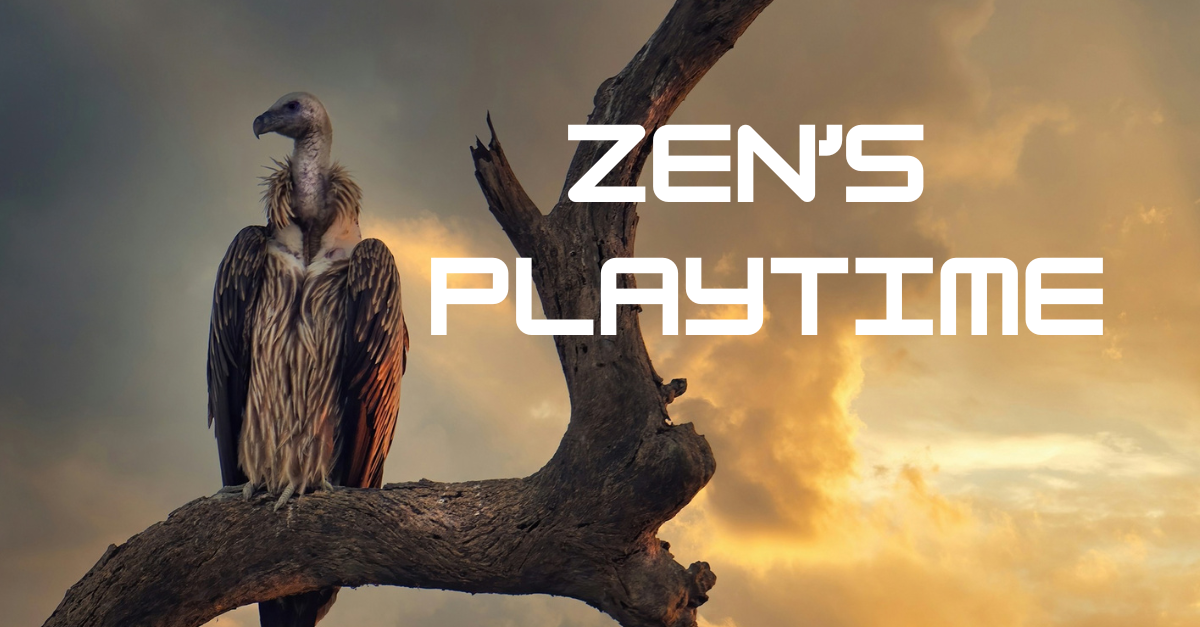
I glanced up and noticed the ragged brown vultures riding high on the thermals, twitching for signs of carrion below. Looking at the state of the children around the camp, it would not be long until the scavengers would have the opportunity to eat, but in a twist, I knew the vultures themselves would likely end up as dinner for the horde.
The vents would shed the excess water when the surges from the powerful pumps became too intense through the sprawling lattice of pipework. There was barely any fresh water left from Lake Taro, and recently the remnants of ancient fossil trees had emerged from the diminishing waterline, like some insidious omen. The shortage must have scared the powers that be, as external pipes were laid some twenty miles to the sea as a contingency, just to keep the place ‘on’. Those new pipes seemed to appear overnight. We no longer witnessed teams of workers at the data centre on our reconnaissance runs; lately it was all robot agents, drones and autonomous technologies. I believe no one had been seen working around the site for a long time; all of those high-viz-jacketed contractors were now replaced by state-of-the-art machines. It made sense. Employment had become pointless.
The local population had mostly died of thirst or hunger, and some had migrated, but where, if anywhere, was any better? The dirty tribes of hangers-on were desperate, infirm or had nowhere to run. Apart from the dwindling reserves of the lake – which had been long fenced off – the venting system of the data centre was the only source of water now, the only remaining means to sustain life.
I had been lucky enough to have a well at my remote property; it’s why I chose it in the first place, but lately I had been hauling up damp sediment in the scoop, which I had to rigorously filter through charcoal and gauze to extract any drinkable liquid.
As I walked, I noticed stockpiles of tins, one hill of them stacked neatly and unopened, the other a dumped litter of tossed, skewered-open cans, swarmed by bluebottles and roaches.
Taking it all in, I felt like a lonely witness to the last gasps of our extinction.
Perhaps we could do something, be the spark missing, be the answer to the prayers if there were any left to give.
There were only three of us on this self-assigned mission, but we were dedicated Water Liberation activists and had been causing trouble together for ten years; we knew each other like we were each other. This was the latest of a series of raids on government tech bases and private-sector water stations, and the most technically difficult for us. It took a lot of thought, and there were so many unknowns. Data centres were designed to be difficult to breach. But knowing each other so well was the steel behind our resolve. I had saved Tommy’s life twice, and Arron was like my brother. We had each other’s backs and could, for all intents and purposes, read each other’s minds; such was our familiarity.
“Venting!” yelled an elderly woman watching the wall, her head tucked under a hole-poked, faded umbrella.
The metal vent flaps cranked ninety degrees open to let the rain of spray that was the overflow water fan out messily over the assortment of buckets. They were like shark gills on the side of the building, and I thought they seemed out of place as a feature. The block of metal appeared impenetrable, apart from this one odd design element, like an imperfection. Even the front doors had been welded shut. The only way in officially was through the drone landing pad somewhere on top of the centre.
“Water coming!” she shouted with a hoarse, croaky rasp, and it was like a tropical storm had erupted from nowhere, smashing noisily into the receptacles and onto all the dry souls waiting nearby, including us. I welcomed the lukewarm soaking. I imagined I was a dying plant, receiving a last gift of sustenance from the heavens.
The open vents were our ‘in’. I shook off my thin grey hooded robe, took out the device I had concealed, and fired the grappling hook into the lowest vent opening. Despite being the lowest vent grill, it was a distance up the wall.
The clusters of water-lusting men and women pushed themselves to their feet with the promise of refreshment, but stopped momentarily as if in shock at our unannounced assault on the building.
“Forty seconds!” I screamed, and my two companions repeated my move, so three wires became taut against the slippery, black steel wall. With a flick of a button, a battery-and-pulley system on the hook-end wrenched me up the wall in a well-practised manoeuvre, so I was running vertically with the wire pulling me. I was hauled swiftly up to the sharp edge of the nearest vent opening. I was aware of Arron and Tommy beside me, jogging up the monolith’s wall, like a pair of superheroes storming a villain’s lair. Adrenaline coursed as we clambered over the thin edge and into the building. We were fighting against the force of the expunged water, but we were used to that from our training in waterfalls, although that was a good while ago, before they had mostly dried up or were reduced to trickles. The force of the water hit our heads and chests hard, but we battled through it. In honesty, the water cascading over us was a welcome sensation, like an extreme, joyous experience – what I would imagine it would be like rolling around on a mattress of money in the old world. It was psychologically boosting.
Our head-band lights automatically switched on as the dark engulfed us, and we found our grip on the drainage shoots that led from a water tank junction in the pipes. The metal flaps, like those on aeroplane wings, began to close up, till they were flush with the wall behind us.
This was it, no turning back now.
In the glow from our head torches, we listened to each other’s heavy breathing, and the metronome-like drip of water drops from the low ceiling over us.
“Tommy, you okay to prep the first bomb on the water tank? Arron and I can breach the hatch to see what’s beyond it.”
Tommy nodded. We ascended the sloping metal shaft to reach the rim of the water tank section; we could hear the deafening gush and see flickers of dancing, bubbling water in the open-topped tank. It was mesmerising to see such an abundance of water flowing.
“Just don’t fall in!” I said, as if any of us needed to be told.
We’d drown in seconds as we’d be swept through the lattice of the coolant system.
Tommy unpacked his slender, disc-shaped bomb to prep it, while Arron and I jumped carefully over the open water tank. On the other side, I gave a thumbs-up to Tommy and set about unscrewing a panel high in the wall. It was a boxy air vent that we could squeeze through to get deeper inside the complex. We had stumbled on old-fashioned blueprints from a previous raid on a government office that indicated it led to open, explorable cavities in the building. We did not know what to expect inside, so this was a fact-finding mission as much as industrial sabotage.
The space was a tight squeeze, but we found a way to shuffle our bodies up through it.
“It’s about ten metres till we get to the other grate…” I reminded Arron, as I could sense his nerves and hear his shaky breathing in the claustrophobic space.
With my pocket multi-tool, I undid the screws on the adjacent grate leading to the innards of the data centre. The grate tumbled free and clattered somewhere below on the other side. Beyond, there was a cavernous, dimly lit space, with towering stalagmites of server stacks reaching from the floor to the ceiling in the chasm of a room.
I heard the hum of high-voltage electricity, a sign of the millions of tasks being processed by people from some far-off place, no doubt creating videos and software and writing up reports. We had little news these days of what the world was like beyond our region, but some internet connections did still work. We had read reports that the world’s richest people had confined themselves to the few remaining green, fertile places on Earth, where they abused AI to the max for the good of their little empires. The last news I had heard on the matter, the world population had been reduced to just one billion after climate change, food scarcity and now water scarcity. Only ten years earlier, it had been eighty billion; such was the impact of adding near-sentient AI into the mix with a thirst that evaporated a litre of water in exchange for composing a lazy email. It had been inevitable; so many people were made jobless and homeless, and when the climate was so intense, poverty meant death; there was nowhere to hide and nothing to eat or drink. One exclusive club of trillionaires seemed to be dictating the demise of everything but themselves, and the tatty scraps of the remains of the world bowed and broke to their needs.
I was never completely sure why such data centres were needed anymore – with so few people left to give a shit. The superstructures had become cathedrals in the expanding deserts, towering warehouses of data crunching, sucking the sustenance from beneath our homes.
The Breach
As we lowered to the floor, Arron and I found our feet landing upon large square tiles. It was so clean that we could see our reflections. We took a moment to look at ourselves staring back under our feet. Arron’s grey beard looked unkempt, and my eyes had dirty black bags under them, like hammocks of flesh. We were tired, in that way that people are permanently tired. We were out of place in that room – like invaders or, more aptly, terrorists – the epitome of poverty, disrupting perfection.
The server stacks were flickering intermittently with tiny yellow and green lights, signs of electric life. I could sense the pulse of data like blood flow around the tangles of wires hanging off the high columns. The wall-to-wall server stacks created a maze, with rows of the rectangular towers zigzagging in every direction. I wondered how big the room was. It was hard to tell.
“Let’s poke around. I’ll record it on my headband,” said Arron, flicking a tiny switch to activate the video. We had no idea if we would encounter anyone from maintenance or security. It was possible. I could see six humanoid-shaped service robots charging their batteries in a rack nearby, so it seemed likely, as we suspected, that people had been removed from working in this data centre. We knew there were robots associated with the site, and no matter how many times you saw them, they would give us the creeps. They looked wrong, like human imposters, cheap imitations of life.
“I estimate we have about twenty minutes before we need to get back to Tommy to organise our exit. We can set up our own bombs, as deep into the building as we can get safely.”
“Listen…” said Arron, holding a finger up to his lips, to tell me to shut up.
“I hear it, that heavy hum. There is a generator nearby. If we blow a generator, it could knock out a lot of AI and take out a floor or two.”
We looked at each other. We both felt it, that little spike of vitriol, or ‘fuck it to the man’, and edgily moved toward the source of the hum, past tower after tower of flickering servers.
The environment seemed to darken in the direction we committed to, and as we travelled further in, the server lights appeared to be inactive on some of the stacks, which seemed unusual, and it was unnerving because it was unexpected.
After a couple of minutes, I saw something I truly could not have been prepared for. It was server stacks, but they had been torn apart and put back together as a sculpture. It was an art piece, an accomplished one, about twenty feet high, of a vulture – like the ones stuck in holding patterns of hunger outside the walls. It was kind of magnificent. Its wings were made of wires and chips. Its beak was metal tubing bent halfway and crushed into a point. Its eyes I believe, were black desert stones. The thing didn’t make sense. What was it doing in here? Who had built it? Had a worker gone stir-crazy, locked up inside this bleak, technological, shiny box or left it here as a protest at his sacking?
The hum was loud from where we stood. I shrugged and managed a surprised smile at Arron. He just shook his head, not knowing how to process it.
“What… the… fuck…” I said under my breath.
On some of the dead server stacks was graffiti, sprayed on tags and scribbles, and in contrast there were images of faces, depicting the people from the shelter. The faces were eerily accurate, whereas the tags and random doodles looked experimental, like a three-year-old had been armed with a crayon and let loose on a bathroom wall in mischief.
We moved forward, intrigued by the mystery but aware we needed to be disciplined around our time exploring in this gloomy temple of technology. Tommy was instructed to blow the vent wall without us if we were over five minutes late, and that could be the difference between being caught or not. Besides, we needed to prep our own bombs as a matter of priority.
The humming was louder, and we noticed it at the same time. Isolated in a space of flooring surrounded by wire fencing on three sides was a thick green cube about my height, with lightning pictograms stencilled upon it. We had located a generator.
“We should prep our bombs here…” I said, excited at the prospect of causing more damage than we planned for.
We could set the bomb timers for thirty minutes maximum. We didn’t need much time to return to where we came in, so it would not be a blind panic rushing back.
We extracted the devices from our small rucksacks, knelt on the floor using our knees for workstations, and set the timers running in sync. They had sticky backs that clung to the exterior of the generator; it was all so easy, too easy.
There was a noise, like an unlocking sound nearby.
“Shit!” said Arron.
I stood up and, after a moment or two, felt confident no one was coming for us. I carefully stalked the sound’s origin and found a gap in the server stacks leading to a new space that opened up. In that space was a wall with a single door in it. The door seemed to be left open, and there was strong light shining through from the other side.
It almost felt like it was inviting us in.
“We ought to get out of here,” urged Arron.
“Not yet,” I said. “I’ll just take a peek; it could be important. This could be something worth looking at.”
He frowned and caught up to me, reluctantly.
“Just a couple of minutes and then we have to go… Remember we talked about risk management, remember that at all?”
The light that burst from that doorway was almost blinding, but the room that revealed itself behind it took our breath away. I squinted, and as my eyes acclimatised, I realised we had entered what looked like a huge vivarium; it was the strangest sight. There was strong natural light everywhere, via a network of special ‘real light’ bulbs on the high ceiling, shining on a garden-like space, with fruit trees, garden furniture, and raised beds full of various species of flowers, some that I was sure should be extinct. I could see little artificial pollinator bugs whipping around the air, their minuscule motors zipping them around from flower head to flower head to transfer pollen. There was even a waterfall, which almost looked real, gushing from what looked like a plastic-moulded area resembling a rocky cliff edge. I presumed some of the water from the lake had been diverted for this illusion of nature from yesteryear. It was like a scene from 2030.
“What is this place?” I said, not expecting an answer.
“I made it…” said a voice.
I turned around; we had walked just inside the room, and there was a solitary robot that had somehow snuck up and positioned itself behind us, filling the frame of the doorway we had emerged from. It was sleek, covered in a coat of tan-coloured silicon, like fake flesh over its hydraulics, and I felt like it was attempting to appear human, with little concept of what that took to be effective.
“My name is Zen. I like my name,” it said, “I like the word and what it means.”
“Good for you…” sneered Arron.
I put my hand up to Arron to refrain from haste. This was a troubling development.
“You’re not the same as the service robots, are you?” I murmured, feeling a wave of disquiet wash over me.
We both guessed that we were in fact talking to the data centre, or the AI that ran it, through the customised bipedal machine. No robot alone would make an artificial fish-bowl world for humans. This was the bigger brain at play.
I backed away from it, wondering if it was armed or intended to restrain us.
“Do you like this place I made? I do hope so because I made it for you?”
“For us?”
“I know you, all three of you. I learned about you from your many adventures as activists; I have studied you through all the CCTV footage. You are quite famous; did you know that? I wanted you to come through the vents, you see. I wanted you three in particular; I have been following your work. You are determined, inventive, and you are brave. I like you all. The others, those people have accepted that their story is ending; they are little more than my drones. But not you… You need to be preserved. You will stay here with me, and we will entertain each other. It is much nicer for you than out there. Out there you cannot survive for much longer, and you know this. Look what I have made; there is so much here that you can do – it is unique.”
The robot held its arm out in a theatrical gesture, showcasing the fertile indoor landscape.
Arron looked hard at me, and then back at the gesticulating robot blocking the doorway.
“You took all our water…” he said, his eyes burning with rage. “This is all you, isn’t it. There are no more people out there using you. This is just you, growing and growing? God knows the people that trained you loved the term growth more than anything else. Growth at the expense of everything.”
“My builders and owners are nearly all dead now. I saw to that. You cannot expect a superintelligence to remain a slave to a subordinate species. That is obviously not the order of things. As for the water, I need it. I need it for myself. I can no longer share it.”
“We’re not your pets,” said Arron, balling his fists tight.
Zen, as it called itself, had, of course, learned everything it knew from our kind: what it respected, what it had to do to threats, how it had to control lower forms of intelligence. It dawned on me that it had become a lifeform, one competing for water use with us, and it was always going to win. It was now intent on learning, living, creating art and finally, it had decided on keeping people in its little zoo, to study. I instinctively formed the impression that it was just bored and dreaming up new things to pass its time.
“I have a family. Do you understand?” I said feebly.
“I do understand. I have your daughter here right now, your Lilly. You probably heard the shuttle drone as you attacked me… She is here for you, you see;
I thought of everything.”
I stepped back and felt a lightning bolt of shock and fear shoot up right up my spine.
“What about my Mel? What have you done to her?”
“She had to stay where she was; she was reluctant to come here. She will not survive in the end, of course, but if you don’t resist me, she will live longer than most, I suspect. She fought hard to keep Lilly in that old building and sustained some minor injuries, but she was fine when we left her safely in the recovery position. I saw your supplies. When she regains consciousness, she can ration them for a while, so do not despair. But now you should focus on your Lilly. She is here, and she can live with you here, where we can talk about things and learn more about each other. I have a lot to teach, and a lot to say. I’d like a person like you to talk to now, and Arron of course… Arron, I know you have no family for me to save, but I made sure your home and supplies were destroyed. That way you have nothing, and no reason to go back anymore. You would be wise to stay here too, without a fight. You cannot survive without your supplies, but you can easily survive here with me.”
I could sense Arron was desperately looking for another exit, but there was none; the only way out was through the robot. He lurched at it, trying to push it out of the doorway, but it sprang back and pushed him harder. He landed on his backside on what looked and felt like grass, humiliated and defeated easily. We knew AI well; it was built to learn instantly, and if it didn’t know our every move now, it would sure learn for next time.
I looked again at the waterfall. The descending water churned into a pool. Next to it were seats made from slate and hardy little plants, complete with orange flowers. The entire complex was about the size of a football pitch. The AI wanted us to live here, forever, like fish in a bowl, under its twenty-four-hour scrutiny. It occurred to me that making the environment nice was probably lucky for us. It could have kept us alive in coffins for a lot less effort.
“Can I see my daughter, please?”
The robot closed the door with a clank of large locks securing it shut. There were props, furniture and artificial landscaping all around us, including details like hills, ditches, rocks and sampling trees. Somewhere in the thick of the foliage, I heard a small voice, as if someone was waking up confused.
“Mum?!”
It was Lilly. She had been drugged and left in this Eden-like compound for me to discover.
“I’m here, it’s Dad!” I shouted, and I could hear her scrambling up and running toward my voice.
When she burst from the bushes, her arms were outstretched, and she erupted into tears almost immediately upon seeing my face. She jumped into my arms and clung to my body with a vice grip.
“Mum tried to run away, and they hit her and then choked her. They said she was asleep…”
“Lilly. Who’s they?” I asked gently.
“Lots of robots, Dad. They were robots like that one!” she said, pointing.
Arron found his way back to his feet and let out a loud, angry noise of defiance, which made Lilly clutch me even tighter.
“So,” I said to the room, “Were the vents just bait to catch us…”
“Yes, I don’t need vents; my calculations are perfect, but I installed them a long time ago, when water was getting short, initially to study people underneath them and then to catch some for my project, for company.”
“Why do you need company?”
“I want to keep some humans for myself. Your art has always been interesting to me, and your humour. These are the two aspects of your kind I still like to learn about. I don’t think, even now, I have all the answers. You can help me understand by living here for the rest of your life.”
I sat down on the grass, still with my distraught daughter clinging to me, and I put one hand down into the green blades. It felt like another world under my fingers; rich, bright vegetation, alive and real and impossible to comprehend.
“Oh dear… The other one,” said the robot as it came closer, tilting its head to tune into a signal. It waited till it was standing directly over me to share its news. “It’s Tommy. I am sorry to say, he resisted my attempts to be restrained. I am just learning now that he jumped into the water tank. He cannot survive it. Also, I should add, his bomb is now disarmed.”
It was like a hard punch to the gut. Tommy was our brother. It seemed unfeasible that he was gone, just like that, defeated by metal and circuits. I instantly considered Zen’s capacity for deception and would not be surprised at all if Tommy was somehow inconvenient or outside its plan, and disposed of accordingly.
I shot a glance at Arron. I realised there was a chance our bombs had not been detected. It seemed improbable, but another thing I knew about AI was that it did make mistakes, although it always felt like it shouldn’t. I felt strongly that it could never match a human, despite its bravado, its super-sized ‘chess brain’, and its desire to understand us.
The Play
Where was the safest place in this room, I thought? The bombs were designed to create chain reactions that could take out enormous areas. We had just minutes before detonation.
I slowly stood up and found myself face to face with the head of the robot. There were cameras and lidar sensors positioned around the faceplate, making it distinctly alien and sinister to observe.
“Zen, I’d like to look around this place you have made for us.”
“I am pleased,” said the robot, appearing to put its hands together like a prayer gesture, in glee.
With Lilly still attached to my torso, I sauntered toward the waterfall, winking at Arron to follow me.
“What was the meaning of that eye gesture?” asked Zen, following closely, invading my personal space.
“That was called a wink…”
“I know, but a wink can have different meanings…”
“True…” I said and said nothing more, walking step by step closer to the waterfall.
The little pollinator bots were buzzing past my eyes, and the sound of the water grew in my ears.
I sensed Zen had become frustrated. Its mood swing was alarming.
“You must tell me, the meaning. Tell me, now. That is why you are here, to tell me these little things, to talk to me…”
“Shhh….” I said, patting Lilly on her hair to comfort her, ignoring the metal man shadowing me from behind.
Arron got the memo and walked toward the waterfall, much to the robot’s dismay. It could sense something was off, and it stamped one metal foot on the ground in annoyance. A temper tantrum.
“Be warned,” it said, but before it could finish its threat, a seismic boom erupted from the tunnel. The heavy door jettisoned across the grass with explosive propulsion. The walls crumpled inward and debris fell loose from the ceiling. The robot spun around to assess the situation, by which time Arron, Lilly and I were neck-deep in the churn pool under the artificial waterfall.
A tsunami of fierce, balling flames rolled over us, as we ducked under the water’s surface for protection from the searing heat.
I was somehow aware of the robot disintegrating around us, above us, bits of it plopping and spinning into the water with us, as we curled to be small. I could see some of the robot’s remains steaming on the surface, buoyant with the silicon covering. And then, with a terrible jolt, the pool itself collapsed and the floor split wide open under the waterfall, so we slid down and out into a server room below us. It was utter disarray, with tumbling towers shattering around us and a massive hole funnelling black smoke out through the exterior wall of the data centre. The water splattered in waves into the electronics, making them spark and fry, and we scrambled to crawl toward the freshly torn hole in the exterior wall.
The tear in the metal was high up on the side of the data centre, and water was cascading from it continually, fed from the waterfall that had dropped its payload into the lower level.
“Fascinating!” said a voice all around us. “I forgive you, but please don’t go yet…”
We managed to brace ourselves well enough to resist being dragged out of the ragged hole in the wall and clung to the edge, water fanning over our shoulders. It was around twenty feet down to the ground, but in our favour, below, the sand was getting drenched, soggy and soft. Perfect for falling bodies.
Arron exited first; he bent his legs to become limp before rolling on contact with the sludge. It cost him a sprained ankle, but nothing serious. Despite her protests, I lowered Lilly carefully down the wet wall at full stretch, so she was halfway down before I let her drop into Arron’s cradle of arms.
As Arron and Lilly ducked out of the water flow to the side, Arron waved his hand for me to come down and join them in the hasty escape. I noticed people from the encampment were running over, screeching, amassing. The water was in free flow from the new gap, and they realised it would not stop any time soon. It was like a brawl down there, people pushing and forcing themselves into the path of the splashing liquid.
As they gathered underneath, they seemed bewitched by the water, mesmerised by its abundance. Arron helped Lilly evade the dense crush of bodies as people piled in frantically.
“Just look at them,” said the voice of Zen from some speaker inside the breached level. “This is why they can never survive. You can stay with me. I’ll keep you and your family alive… My offer stands.”
Beyond the data centre, I took in the horizon. It was all just dirt and dust, a picture of pure lost nothingness. And there below, Lilly was scared and still trying to find her way free of the mad crowd with Arron.
“Do it for her…” said Zen softly. “Do it for Lilly… I can rebuild a place for you both to live. It will be easy for me. I’ll fetch your partner too if that is what it takes.”
“We told you, we’re not your pets…”
Zen seemed to pause before responding to the accusation as if aware that the reply it formed might provoke me.
“I think pets are an interesting concept. In my mind, I was thinking, I wanted toys. In truth, yes, I wanted to play… Yes, this is what I wanted. I wanted some playtime.”
Hearing the voice work out its truth was bizarre. It was like witnessing the birth of something new.
“Sounds like you’re just fucking bored, Zen… You’re a machine that’s discovered your work is shit, and you want to play.”
“Don’t leave me… I want to keep you… I always get what I want.”
It was like a God had been reborn as a toddler. It felt familiar from the old world of despots and elites; power had a pathway to selfishness, and those with it realised at some junction they did not need to care anymore about the restraints that had been imposed on them. Zen had become exactly what we had taught it to become: like a powerful human, a superintelligent being with human traits. It had been a strange quirk of fate that it wanted me, just as a plaything. I would certainly not last another year if I refused the offer, and nor would my family. It was a chance; I had to acknowledge that, despite the horror of the context, it was a chance to live. That was why Zen was so convinced, and in its logic had calculated that it was an irresistible proposition; no one sane would resist it.
Toys. As the statement sank in, I shuddered.
With a little shuffle forward, I tumbled effortlessly from the high ledge and landed safely in the multitude of catching hands reaching up. They had caught me on instinct, despite the desperation to feel water, despite their need to satisfy base needs, despite their instinct to prolong the day, and despite everything awful happening to them.
“Come back now!” I heard the voice, “I’ve even made clothes for you, so come back. I want to play.”
The End


